Code becomes structured 3D
Three.js asset modules build into models with parts, materials, joints, and motion. The structure remains available to the editor and the agent.
An Arsonist project / 3D software
ghostpoly.com
Developed by Arsonist for games, simulations, and digital twins. AI agents work on models and code while people inspect, edit, and test the result in the same workspace.
01 / Design approach
A person sets the requirements and provides references. The AI works on models, scenes, scripts, and UI.
Parts, dimensions, properties, and motions are visible in the editor and can be adjusted directly.
Play runs the project in Studio. Input, behavior, and Console feedback inform the next revision.
The project can be shared in a browser, built as an application, or exported as 3D assets.
Edits project files, builds assets, checks the output, and revises it using the person's direction and runtime feedback.
Sets the intent, inspects the structure, makes visual edits, and evaluates how the project behaves.
Selection, files, screenshots, and Console feedback provide shared context for each iteration.
02 / Studio
The editor combines a scene hierarchy, Inspector, code editor, and Console. These captures show a production-cell simulation and an articulated model.
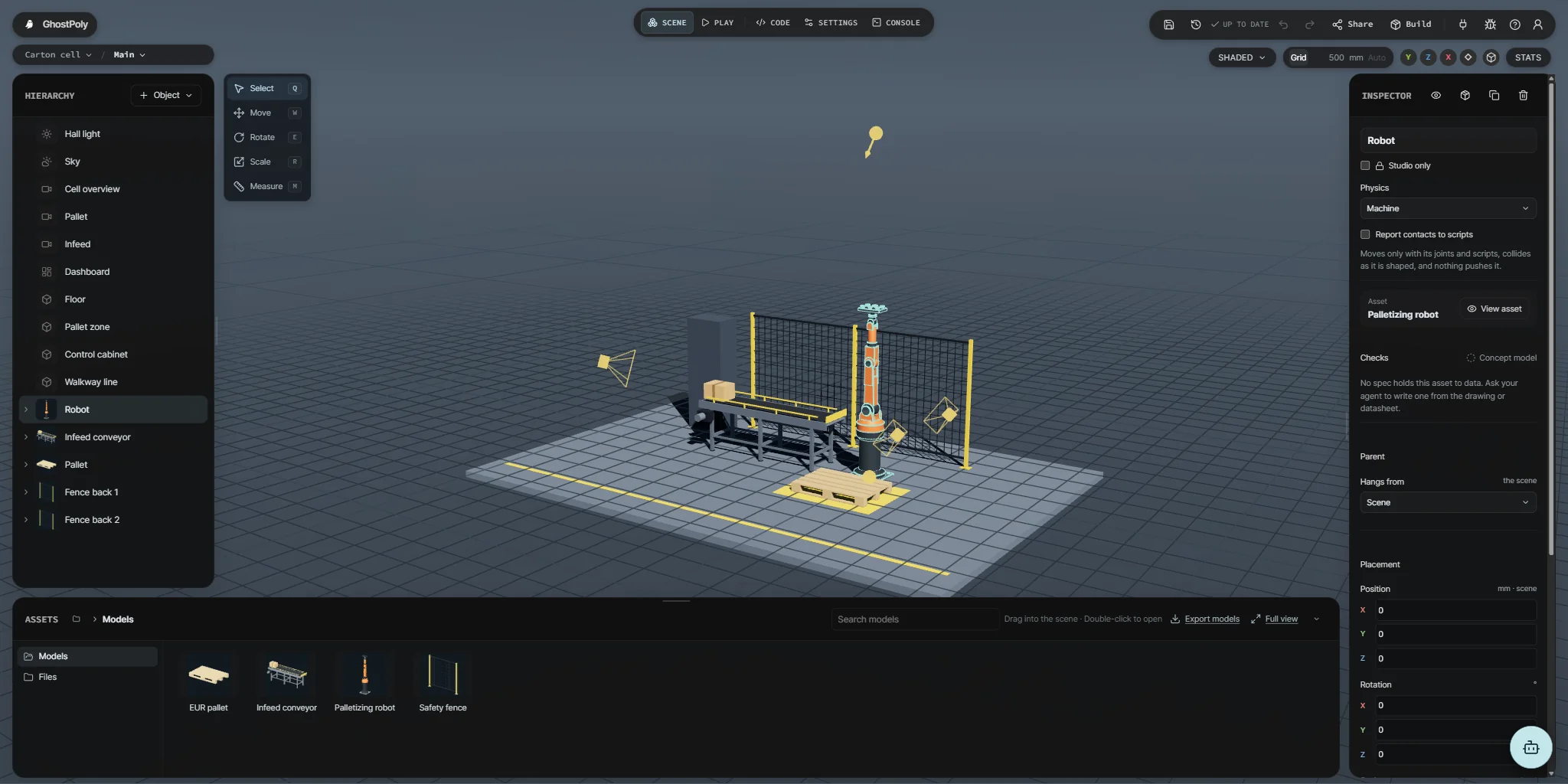
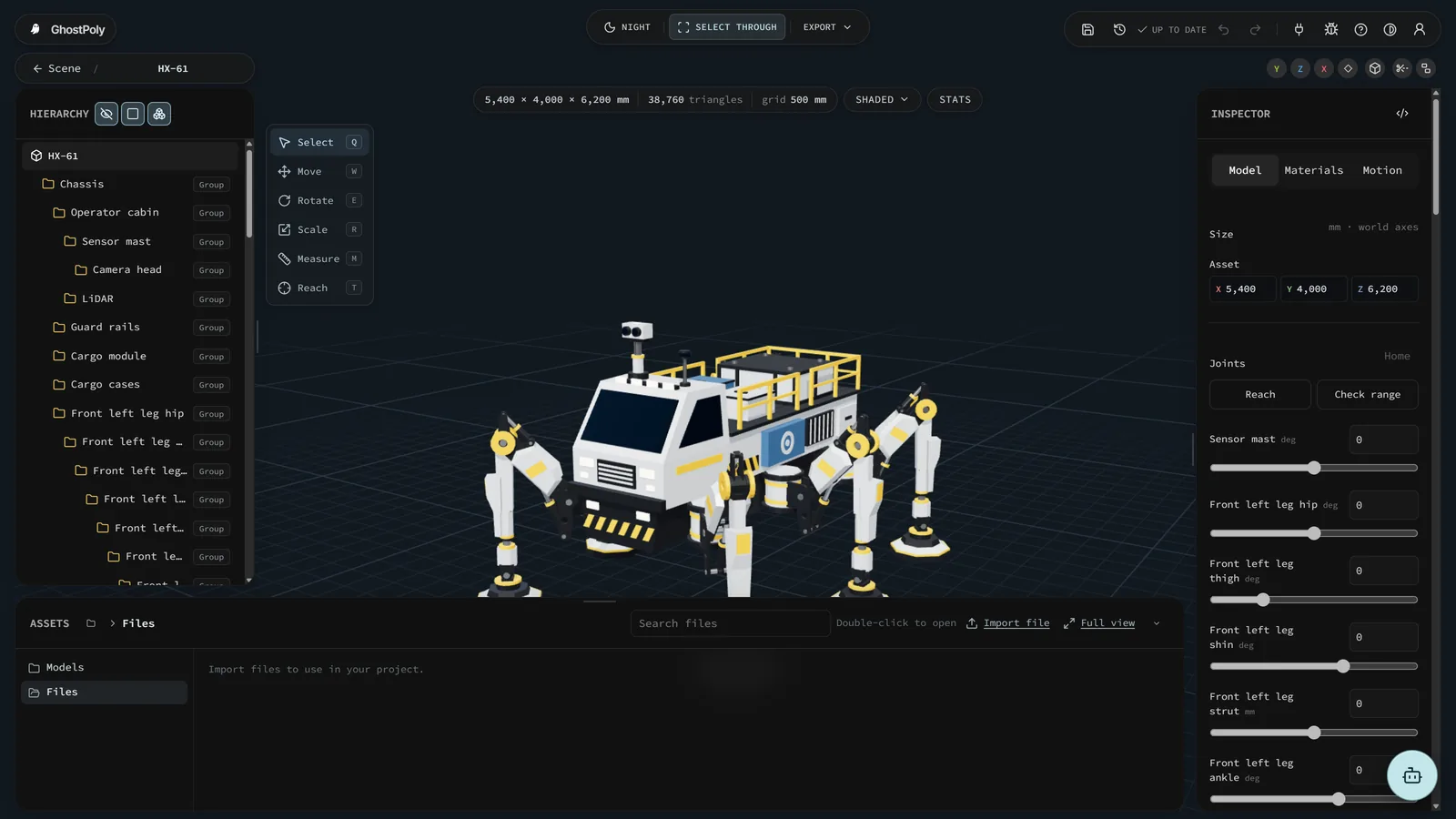
Shared contextSelection, files, screenshots, and Console feedback connect the human and agent workflows.
Editable structureModels have named parts and motions; scenes, scripts, UI, and data remain project files.
History built inChange records and project versions preserve a path through the iterations.
03 / Applications
The engine is separate from the applications made with it. These examples cover game logic, simulated equipment, and structured mechanical models.
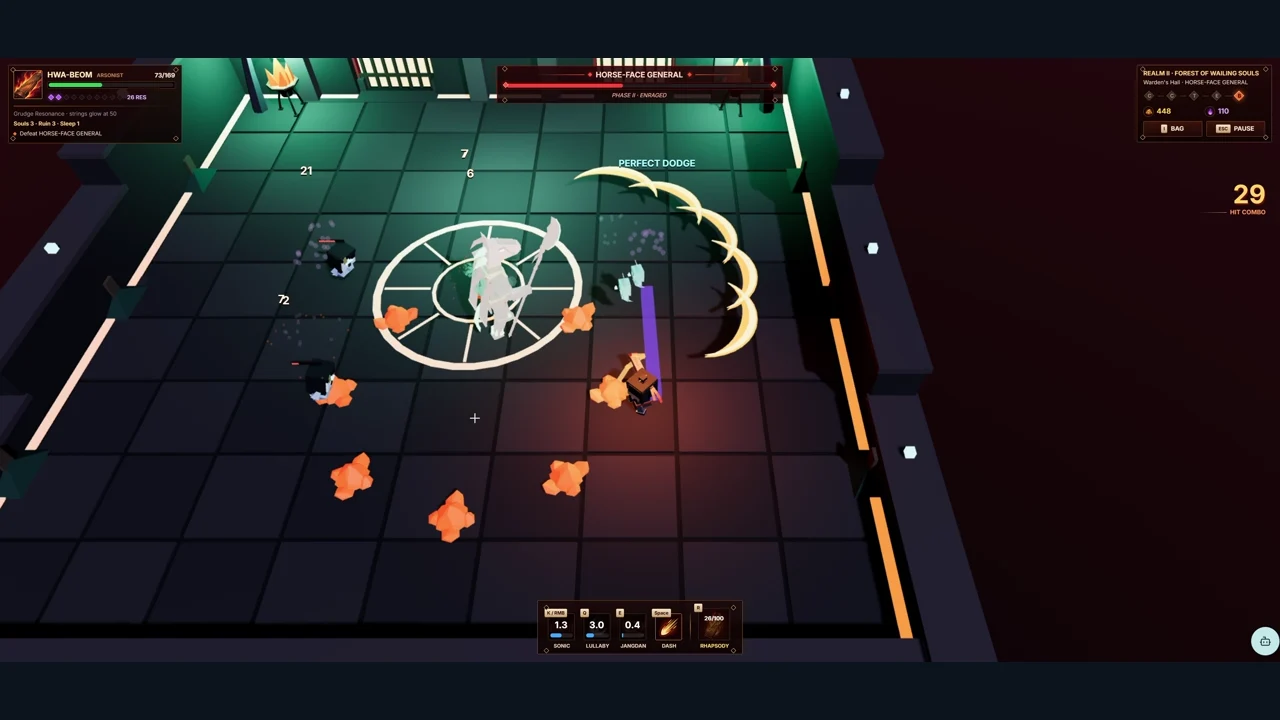
Boss encounters, character motions, combat rules, and game UI in one project.
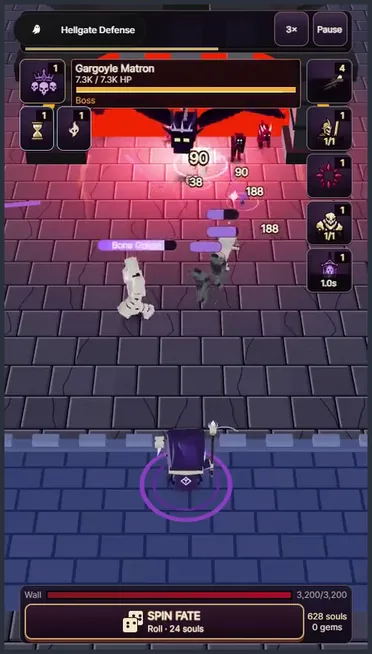
A portrait defense game with waves, skills, and touch-oriented controls.
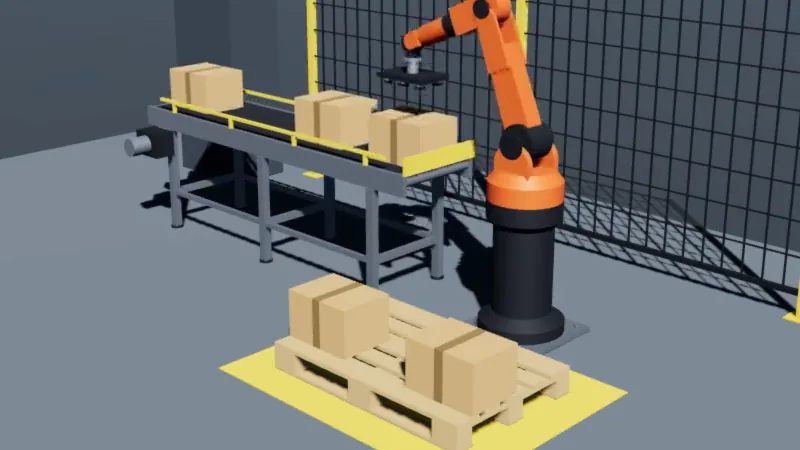
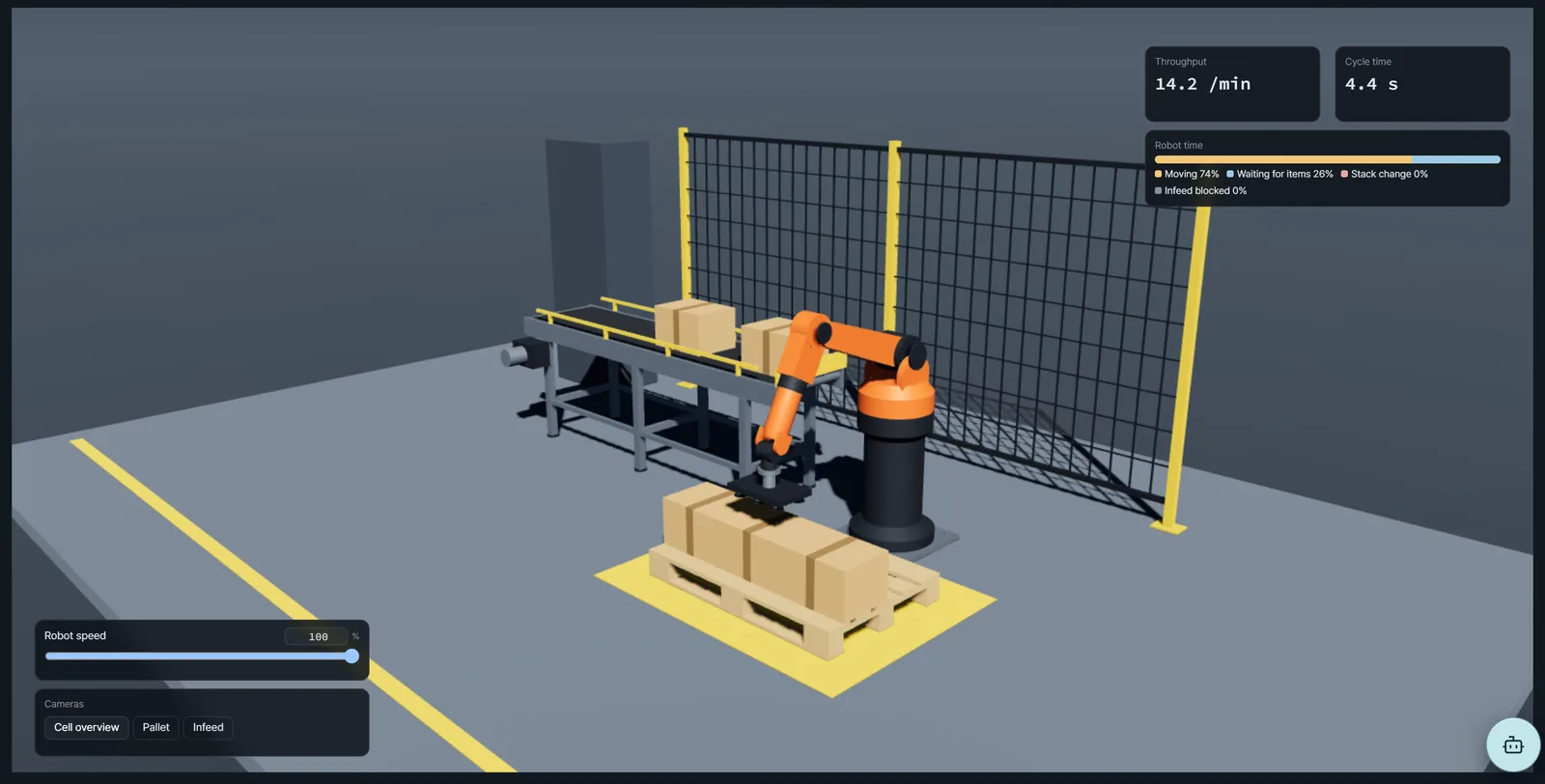
Coordinate a robot, conveyor, and cartons; explore the simulated process through a dashboard.
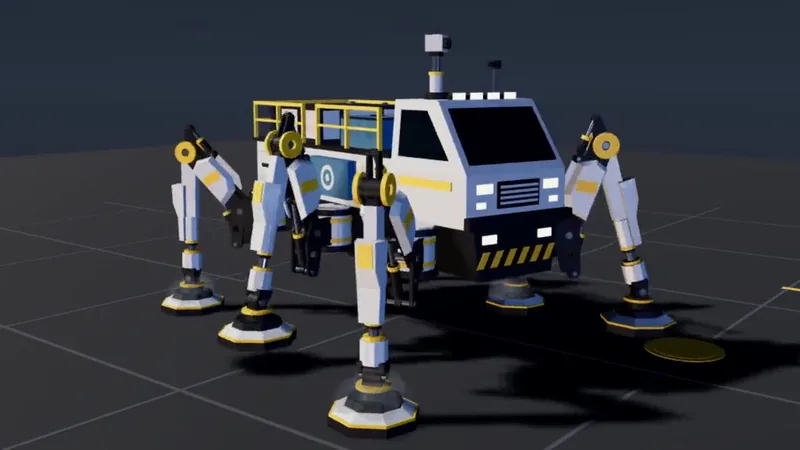
A blueprint-based model with named parts, joint controls, and scripted walking.
04 / Engineering
Three.js asset modules build into models with parts, materials, joints, and motion. The structure remains available to the editor and the agent.
QuickJS / WASM runs authored asset code. The browser and server workers use the same engine to build and check its output.
Scripts connect input, physics, animation, UI, and audio. Studio and shared links can also use live data connections.
Authentication, project history, usage metering, subscriptions, and a separate Admin for accounts, AI runs, billing, and shared links.
05 / Outputs
The same project supports several delivery formats.